


Pickleball & Your Knees
March 3, 2026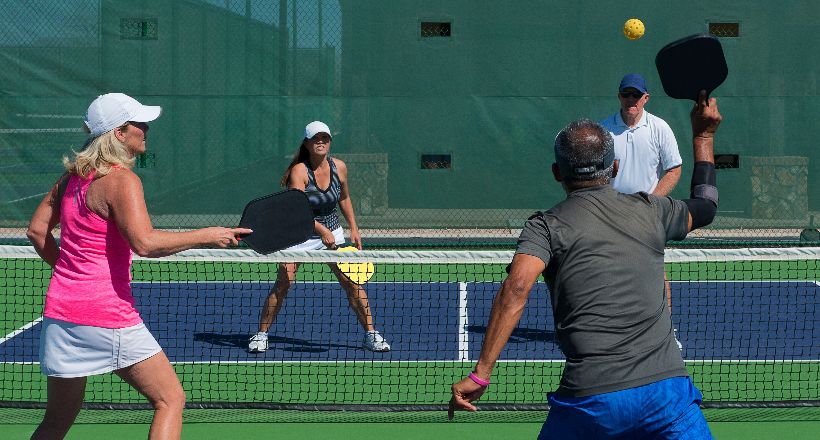
“Smart play of slippery slope?”
——-
Walk near almost any playground in America and you’ll hear the unmistakable pop-pop-pop of pickleball. According to the Sports & Fitness Industry Association, pickleball has been the fastest-growing sport in the United States for multiple consecutive years, with participation now measured in the millions. That surge isn’t coming from twenty-year-old Division I athletes. It’s coming from active adults who still want competition, camaraderie, and movement — without punishing their joints. Which raises the obvious question: if your knees have seen a few decades of mileage, is pickleball a friend or foe?
The good news is structural. A pickleball court is significantly smaller than a tennis court, which generally means less sprinting and less ground to cover. The underhand serve also reduces the explosive push-off forces seen in sports like tennis and basketball. According to the Mayo Clinic, low-impact activities such as walking, cycling, and swimming are typically recommended for individuals with knee osteoarthritis because they place less stress on the joints while still promoting strength and mobility. Pickleball falls somewhere between walking and tennis — not zero impact, but generally lower load than many traditional court sports, especially when played in doubles.
That said, “lower impact” does not mean “no risk.”
According to Johns Hopkins Medicine, sudden directional changes and pivoting can aggravate arthritic knees, particularly when surrounding muscles are weak. And as the Arthritis Foundation notes, strengthening the muscles around the knee — particularly the quadriceps and hips — helps absorb force and stabilize the joint. Translation: the knee is often the victim, not the culprit. Weak glutes, tight hips, and poor balance tend to shift load directly into the joint. In pickleball, most knee irritation comes not from steady movement but from abrupt lunges at the “kitchen” line or poorly controlled lateral cuts.
So what’s the play? If your knees are cranky but not collapsing, pickleball — especially doubles — can be a smart addition to an active lifestyle. Wear proper court shoes, warm up thoroughly, build strength off the court, and respect recovery. Mild next-day soreness is normal; persistent swelling is not. In other words, approach pickleball the way you would any investment: measure the downside, strengthen the fundamentals, and avoid unnecessary risk. Do that, and the fastest-growing sport in America might just help you stay fast enough to enjoy it.

