


When You Suffer from Headline Fatigue
March 31, 2026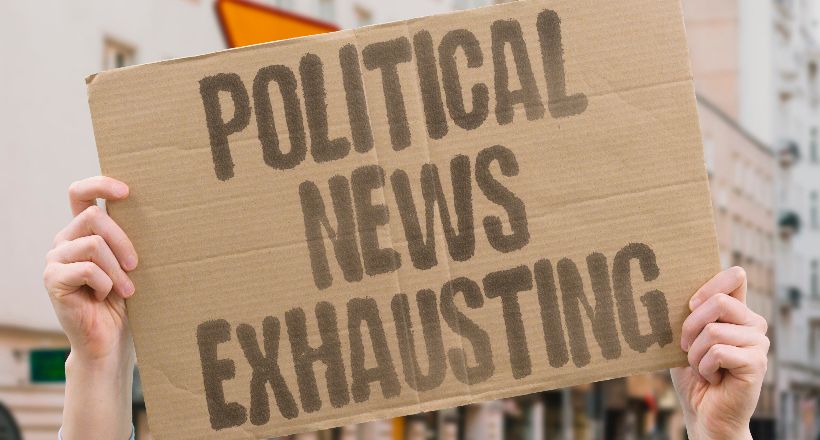
“Why constant conflict is quietly eroding focus.”
——-
Everyone feels tired at some point. Physical fatigue is easy to recognize—low energy, heavy eyes, slower movement. Mental fatigue, however, is more subtle and increasingly common. Today’s environment delivers a constant stream of tension: budget fights in Congress, geopolitical instability tied to Iran, and a nonstop cycle of breaking news. It’s not just background noise—it’s cumulative cognitive strain that quietly wears people down.
According to WebMD, mental fatigue affects the mind rather than the muscles, making it harder to detect but no less impactful. Unlike a long workday, this form of fatigue doesn’t have a clear off switch. Continuous exposure to political conflict—especially issues outside one’s control—can leave people mentally overloaded. Over time, that overload begins to show up in both mood and behavior.
One of the first signs is increased irritability and a shorter fuse. In a politically charged climate, it’s easy to assume frustration is driven purely by disagreement. But often, it’s exhaustion. Mental fatigue reduces the brain’s ability to process nuance, making conversations feel more aggravating than they should. At the same time, productivity declines. Concentration slips, motivation drops, and distractions—particularly news and social media—become harder to ignore.
Focus also suffers in more subtle ways. People begin to “zone out,” even during important tasks, and decision-making becomes less sharp. Sleep can be affected as well, as the mind struggles to shut down after a day of processing uncertainty and conflict. According to WebMD, mental fatigue can also increase anxiety by activating the body’s stress response, creating a lingering sense of unease that doesn’t easily fade.
The broader takeaway is that not all fatigue comes from work—it increasingly comes from the environment. The combination of domestic political gridlock and global instability places a constant demand on attention and emotional bandwidth. Recognizing that—and stepping back from the noise when necessary—isn’t avoidance. It’s a strategy to protect clarity, performance, and long-term well-being.

