


The Grand Canyon Disaster
September 1, 2026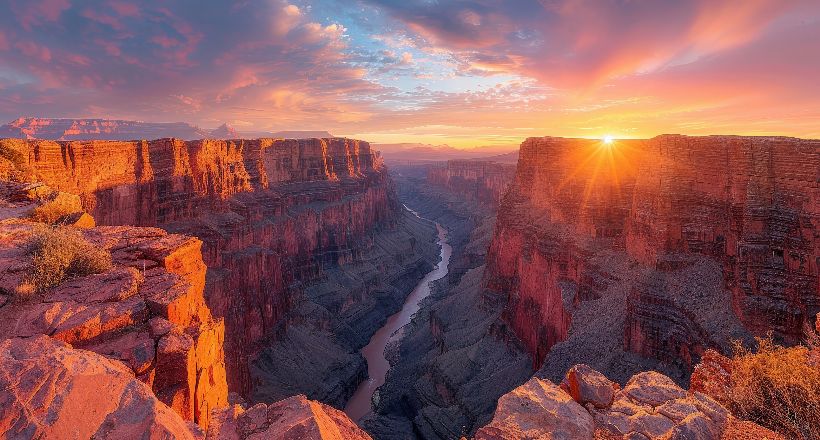
“A reminder of nature’s power & fragility.”
——-
My appreciation for the Grand Canyon began in 1991 when several of my college fraternity brothers and I decided to hike the famed Bright Angel Trail to the canyon floor.
What sounded like a great adventure quickly became one of the most physically demanding experiences of my life. The descent took us approximately nine to ten hours as we navigated the steep, narrow trail, frequently stepping aside for mule trains. In some places, one careless step could have resulted in a very dangerous fall.
Yet the scenery was unforgettable. With every switchback, another layer of the canyon appeared until we eventually reached Phantom Ranch at the bottom. After hours on the trail, it felt like an oasis.
Of course, we still had to climb back out.
That proved considerably harder. The Grand Canyon has a way of humbling you, regardless of your physical condition. The return seemed endless, with dehydration and exhaustion becoming very real concerns. More than three decades later, I still remember the feeling of finally reaching the top.
Those memories made the tragedy at the Grand Canyon this past week particularly difficult to see.
A powerful flash flood swept through Bright Angel Canyon and the Phantom Ranch area—the same area my friends and I traveled through years ago. Lives were lost, dozens of people had to be rescued or evacuated, and trails, bridges and portions of the canyon’s critical water infrastructure were badly damaged.
The loss of human life, of course, overshadows everything else. But the disaster also reminds us of something easy to forget about the Grand Canyon.
It looks indestructible. It isn’t.
The massive rock formations have survived for millions of years, yet the ecosystem within them can be remarkably fragile. Vegetation, wildlife habitat, streams, archaeological sites and trails exist in an environment where fire, drought, erosion and flash flooding can dramatically alter the landscape.
That is particularly significant because the canyon was already recovering from the massive Dragon Bravo Fire of 2025, which burned approximately 145,000 acres on and around the North Rim and destroyed the historic Grand Canyon Lodge.
Now another recovery begins.
The Grand Canyon has always fascinated us not only because of its beauty, but also because of its mysteries. Restricted areas have inspired stories of hidden caves, lost civilizations and even secret discoveries. Most belong more to folklore than fact. In reality, many areas are restricted to protect archaeological sites, Native American cultural resources, fragile ecosystems—or visitors from extremely dangerous terrain.
Perhaps this week’s tragedy offers a more important lesson.
The Grand Canyon is rugged enough to make us believe it can withstand almost anything. Yet within that enormous landscape exists a delicate balance between geology, water, vegetation, wildlife and human activity.
We visit the Grand Canyon to experience its extraordinary strength and permanence. Events like this remind us of its vulnerability as well.
The Takeaway: Nature has a way of reminding us that strength and fragility can exist side by side. The Grand Canyon has survived for millions of years, but that doesn’t mean it is immune to damage—or that we should ever take its power for granted. Respecting and protecting places like this helps ensure that future generations will have the same opportunity to stand at its edge, look down and simply be amazed.

