


When 5% Changes Everything
September 8, 2026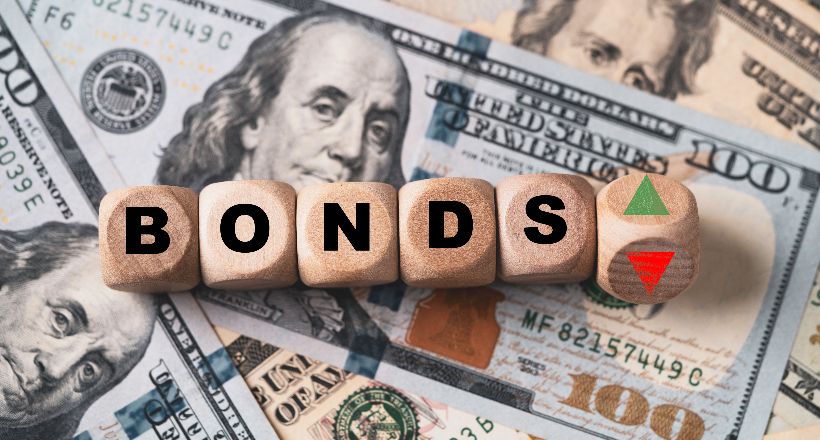
“Raising bond rates need to be watched by investors.”
——-
For much of the past decade, investors had a fairly simple reason to favor stocks: bonds just didn’t pay enough. That equation is changing. The benchmark 10-year U.S. Treasury yield is now around 4.8% and again within striking distance of 5%. According to Reuters, rising yields are being driven by a combination of persistent inflation concerns, government borrowing and competition for capital, while higher oil prices have added another potential source of inflation. Federal Reserve Governor Christopher Waller has also pointed to concerns about the nation’s fiscal position and the enormous amount of capital being directed toward artificial-intelligence infrastructure as factors contributing to higher yields.
Why does 5% matter? Because it changes the conversation. When investors can earn close to 5% from U.S. government debt, stocks suddenly have more competition. Investors have to ask themselves how much additional return they expect to receive for accepting the greater volatility and uncertainty of equities. Higher Treasury yields can also put pressure on stock valuations because future corporate earnings become less valuable when discounted at higher interest rates, while companies themselves face more expensive borrowing. Reuters recently noted that the S&P 500 has gained more than 11% this year, but that yields approaching 5% could become a meaningful obstacle to further gains—particularly for companies whose valuations depend heavily on earnings expected well into the future.
None of this means it is time to abandon stocks and pile into bonds. A diversified portfolio still serves a purpose, and stocks remain an important vehicle for long-term growth. But after years when investors sometimes joked that TINA—“There Is No Alternative”—was the reason to own stocks, there clearly is an alternative again. With the 10-year Treasury near 4.8%, inflation still above the Federal Reserve’s target and the Fed preparing for its September 15–16 meeting, the bond market deserves considerably more attention than it received during the era of near-zero interest rates. According to the Associated Press, rising government-bond yields can mean higher borrowing costs for consumers and businesses, but also better returns for savers and investors.
The Takeaway: A 5% Treasury yield isn’t just another number flashing across a TV screen. It changes the risk-and-reward calculation. For investors, the question may no longer be simply, “How much can I make?” It may also be, “How much risk do I really need to take?”
Please keep in mind this information should not be considered as financial advice. Investment decisions should be based on individual research and consultation with a qualified financial professional. The value of investments can fluctuate, and past performance is not indicative of future results. Always consider your risk tolerance and financial goals before making investment decisions.

