


Discipline is the Foundation of Personal Freedom
October 13, 2026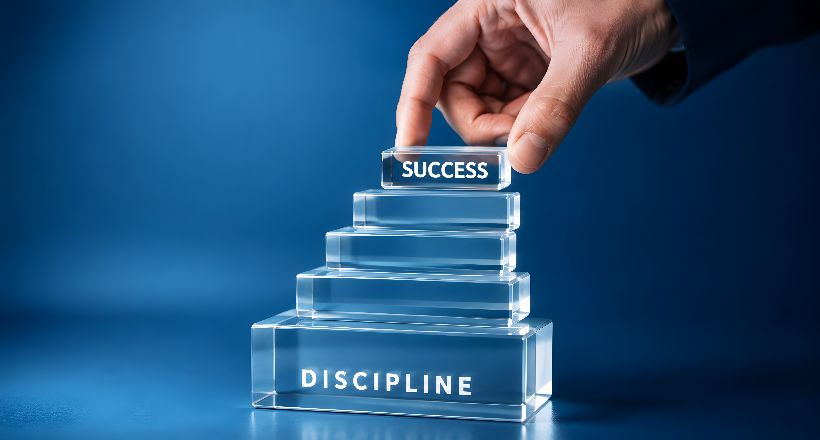
“The surprising connection between self-control, independence and living life on your own terms.”
——-
We tend to think of personal freedom as the ability to do whatever we want, whenever we want. But what if genuine freedom comes from having the discipline to occasionally say no? Whether it involves managing our finances, maintaining our health, controlling our emotions or simply keeping our commitments, personal discipline creates choices that impulsive behavior can quietly take away. Author James Clear explores this idea in his bestselling book Atomic Habits, emphasizing how small, consistent behaviors help shape our identity and produce meaningful long-term improvements. Psychiatrist Viktor Frankl offered a deeper perspective in his classic Man’s Search for Meaning, arguing that even under extraordinarily difficult circumstances, individuals can retain a measure of freedom in how they respond to life’s challenges. Both authors, approaching the subject from very different experiences, remind us that freedom isn’t simply about having options. It’s also about developing the character and self-control to make the most of them.
Interestingly, psychology offers evidence supporting the value of self-discipline. A landmark 2011 study led by Duke University psychologist Terrie Moffitt, published in the Proceedings of the National Academy of Sciences, followed approximately 1,000 individuals from childhood into adulthood and found that stronger childhood self-control was associated with better physical health, financial outcomes and fewer substance-dependence problems by age 32. Although the research was observational and doesn’t establish that discipline alone caused these outcomes, the findings reinforce an important principle. The person who exercises regularly has a better opportunity to preserve physical independence. The individual who saves consistently builds greater financial flexibility. And someone who learns to pause before reacting emotionally may protect relationships that matter most. None of this requires perfection, only consistency and a willingness to think beyond immediate gratification. Perhaps that’s the great paradox of personal freedom: The more responsibility we take for our daily choices, the less likely we are to become prisoners of our habits.
The Takeaway: Personal discipline isn’t the opposite of freedom; it’s one of the most powerful tools we have for creating it.

