


How Cartel Violence Reshapes Direct Foreign Investment
February 24, 2026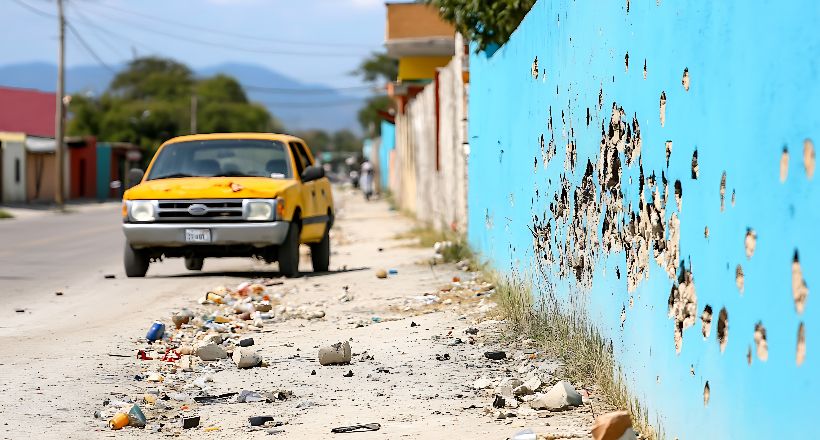
“When security risk changes the math.”
——-
Foreign direct investment doesn’t flee countries—it flees uncertainty. Cartel violence turns uncertainty into something painfully operational: rerouted trucks, interrupted shifts, nervous employees, higher insurance premiums, and executives suddenly asking, “Can we keep the plant running if the highways close?” That’s not abstract. After a recent operation targeting a top cartel figure, violence and road disruptions spread across parts of Mexico, including areas near major cities and tourist zones, according to reporting by The Guardian. And even when companies say day-to-day operations remain steady—Scotiabank, for example, told analysts its Mexico branches were operating normally despite the unrest, according to Reuters—those same headlines still land in boardrooms and risk committees.
Investors make decisions at the margin, and violence moves the margin. A key point: multinational firms don’t only evaluate the country; they evaluate specific states, corridors, and nodes—where the factory sits, which port it needs, and which highway gets product to the U.S. border. That’s why Mexico’s security map matters so much. The U.S. Department of State’s Mexico travel advisory breaks risk down by state and explicitly flags crime, kidnapping, and cartel-related violence concerns in multiple regions, according to Travel.State.gov. Academic and central-bank research lines up with the real-world intuition: in a Banco de México working paper analyzing Mexican states over 2005–2015, researchers examine how different crimes correlate with FDI inflows—evidence that higher crime can be associated with weaker investment at the state level, according to Banco de México.
So what does cartel risk do to FDI decisions in practice? It rarely shows up as a dramatic “we’re leaving Mexico” press release. It shows up as higher hurdle rates, shorter payback windows, more reliance on joint ventures, and a preference for “safer” industrial clusters where infrastructure and security capacity are stronger. It also pushes more firms toward mitigation tools—security hardening, redundancy in logistics, and risk-transfer options—because, as UNCTAD has warned more broadly, uncertainty and geopolitical friction reduce investor appetite for long-term, productive investment and shift attention toward risk management.
Bottom line:
Cartel violence doesn’t just threaten personal safety—it changes the math of investment. And when the math changes, capital doesn’t panic… it simply goes elsewhere, or demands a bigger return to stay.

