


Investing in the Longevity Economy
April 7, 2026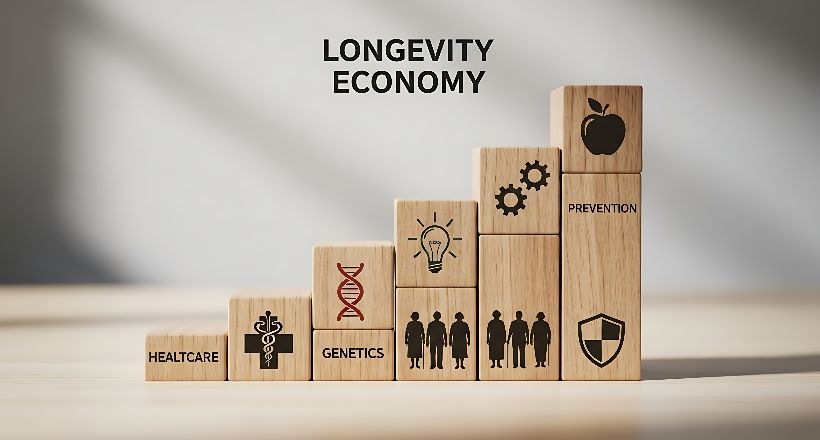
“ Profiting from longer lives.“
——-
The longevity economy is no longer a future concept—it is already reshaping global markets. In 2020, people aged 50 and older contributed approximately $45 trillion to global GDP, or about 34% of total output, according to AARP’s Global Longevity Economy Outlook. Despite representing just 24% of the population, this group drives a disproportionate share of spending, with that figure projected to rise significantly by 2050, according to AARP and Brookings Institution analysis. This is the key shift: aging is not a drag on the economy—it is becoming one of its most powerful demand drivers.
What makes this trend investable is not simply longer lives, but longer periods of productivity and consumption. The focus has shifted from lifespan to “health span,” meaning the years spent in good physical and cognitive condition. That evolution is expanding multiple sectors at once, including healthcare, wellness, housing, and financial services. Research published in The Journal of the Economics of Ageing notes that longevity will “shift the mix of sectors…with both health and education expanding further and new financial products arising,” reinforcing that this is a broad, multi-industry theme rather than a narrow niche.
For investors, the opportunity clusters around three areas: preventative health and wellness, infrastructure for aging such as senior housing and home retrofits, and financial longevity, where longer lifespans require new retirement and income strategies. Within that framework, companies like UnitedHealth Group and Eli Lilly and Company stand out as practical examples—both positioned at the intersection of rising healthcare demand and innovation tied to aging populations. The broader takeaway is simple: longevity is not about managing decline—it is about extending economic life, and that makes it one of the most durable investment themes of the next decade.
Please keep in mind this information should not be considered as financial advice. Investment decisions should be based on individual research and consultation with a qualified financial professional. The value of investments can fluctuate, and past performance is not indicative of future results. Always consider your risk tolerance and financial goals before making investment decisions.

