


Opportunity Doesn’t Stop at the Border
August 18, 2026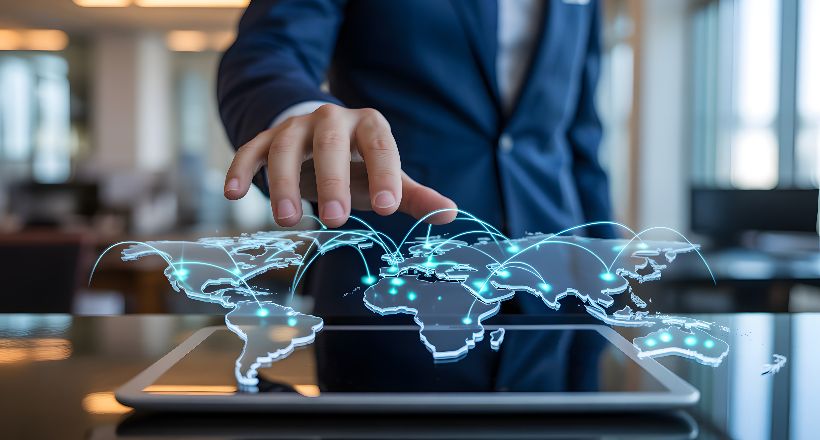
“Looking beyond the market you know.”
——-
For most American business owners, the United States is more than enough market to worry about.
That’s understandable. But it can also create tunnel vision.
The OECD reports that digital technologies have reduced some of the costs associated with international trade for small and medium-sized businesses. Digital platforms can help smaller companies find customers overseas, participate in global supply chains and access international markets that once would have required substantial infrastructure.
That doesn’t mean your company needs an office in London.
It means the definition of your marketplace has changed.
A consultant in Dallas can work with a client in Paris. A specialty manufacturer can locate suppliers in Asia. A newsletter can attract readers on several continents. A small company can hire expertise that isn’t available in its hometown.
And increasingly, AI-powered translation and communication tools are reducing another traditional obstacle: language.
The bigger lesson isn’t necessarily “sell overseas.”
It’s look overseas.
A business owner walking through a supermarket in Tokyo, a hotel in Switzerland or a small shop in Florence should be asking questions. Why do they do it this way? Why isn’t this product common at home? What does this business understand about its customer that we don’t?
Innovation often begins by noticing something outside our normal field of vision.
The Takeaway: You don’t have to become an international company to think internationally.
Sometimes exposure to another market simply helps you see your own market differently.

