


Why Food Tastes Better in Italy
November 10, 2026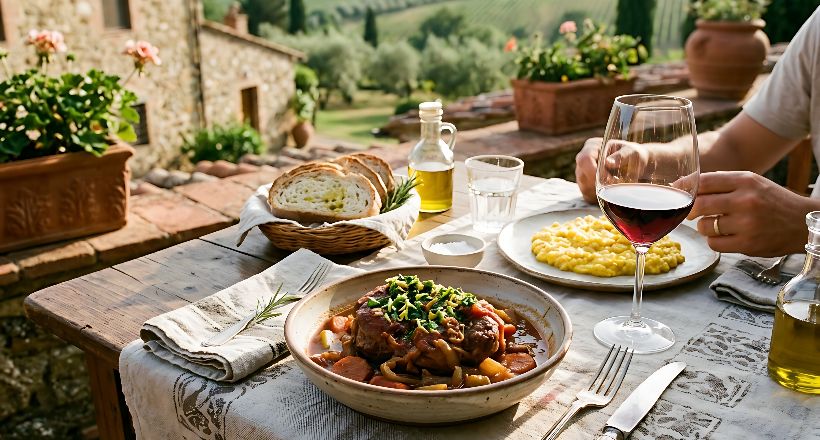
“The Italian approach to eating offers lessons in flavor, health and simplicity.”
——-
Having just returned from a wonderful trip through Tuscany, I was reminded of something I’ve noticed during previous visits to Italy: the food simply tastes better. Whether enjoying a plate of fresh pasta, a simple tomato sauce or locally prepared vegetables, there is a noticeable difference in flavor and preparation. Much of it comes down to an Italian philosophy that emphasizes quality ingredients, traditional cooking methods and simplicity rather than complicated recipes. Fresh produce, extra-virgin olive oil, herbs and seasonal ingredients are central to the experience. Even the pasta deserves a closer look. Italian cooks sometimes use finely milled tipo 00, or double-zero flour, particularly for fresh pasta, while dried pasta is traditionally made with durum wheat semolina. According to Italy’s National Institute of Health, double-zero refers to a highly refined classification of wheat flour. It can produce a delicate texture, but it isn’t inherently healthier than other flours. The difference is often in the preparation rather than some magical ingredient.
There is also considerable science supporting the health benefits of traditional Mediterranean eating. The landmark PREDIMED study, published in a corrected 2018 edition of The New England Journal of Medicine, found that participants at high cardiovascular risk who followed a Mediterranean diet supplemented with extra-virgin olive oil or nuts experienced fewer major cardiovascular events than those assigned to a reduced-fat diet. The study reinforces the value of an eating pattern emphasizing vegetables, fruits, legumes, nuts, olive oil and minimally processed foods. Portion sizes also deserve attention. In Italy, pasta is traditionally served as a primo, or first course, rather than an oversized main entrée. According to a systematic review conducted for the 2025 Dietary Guidelines Advisory Committee, larger portions generally increase calorie consumption, while smaller pre-portioned servings can reduce it. Of course, not everything eaten in Italy is healthy, but traditional Italian cooking provides an excellent example of how satisfying meals can be prepared without excessive portions or elaborate sauces.
Perhaps the most appealing difference is the Italian relationship with food itself. Meals are meant to be enjoyed, conversations are rarely rushed, and eating is treated as an experience rather than another task to complete. Research published in the American Journal of Clinical Nutrition in 2014 found that slower eating was associated with lower calorie intake during meals, although that doesn’t necessarily translate into long-term weight loss. Add the walking that often accompanies daily life in Italian towns and villages, and the overall lifestyle becomes part of the equation. During our recent travels, I was struck by how satisfying even the simplest meals could be. There is something refreshing about a culture that appreciates good food without constantly turning eating into a complicated nutritional debate.
The Takeaway: Italy reminds us that eating well doesn’t require sacrificing pleasure. Better ingredients, thoughtful preparation, sensible portions and taking time to enjoy a meal may be among the simplest lessons we can bring home from the Italian table.

