


Why Steakhouse Steaks Taste Better
June 23, 2026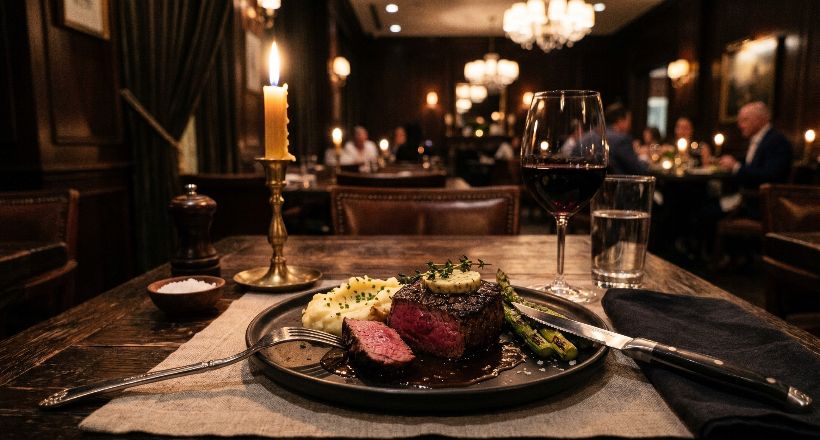
“The science and craftsmanship behind a perfect steak.”
——-
Few dining experiences generate as much satisfaction as a perfectly prepared steak, which helps explain why steakhouses continue to thrive despite the popularity of home grilling. The difference begins long before the steak reaches the grill. According to the United States Department of Agriculture (USDA), higher grades of beef such as USDA Prime contain greater levels of marbling, the intramuscular fat that contributes to tenderness, juiciness, and flavor. Many premium steakhouses also utilize dry-aging techniques, a process that allows natural enzymes to tenderize the meat while concentrating its flavor through controlled moisture loss. The result is a richer and more complex taste profile than what is typically found in supermarket cuts.
Another key advantage is heat. While most home grills operate between 450 and 700 degrees Fahrenheit, many commercial steakhouse broilers can exceed 1,500 degrees. This intense heat rapidly creates the flavorful crust that diners associate with a great steak. Food scientists describe this process as the Maillard reaction, a series of chemical reactions between amino acids and sugars that produces hundreds of flavor compounds and the characteristic browning found in grilled meats. According to researchers at the University of California, Davis, this reaction is one of the primary drivers of the savory flavors that make cooked meats so appealing.
Perhaps most important, steakhouses focus relentlessly on consistency. Their chefs prepare hundreds of steaks each week, using precise seasoning, cooking temperatures, and resting times. Many finish steaks with butter or beef tallow to enhance richness and mouthfeel. The good news for home cooks is that these techniques can be replicated. Purchasing a well-marbled steak, seasoning it generously with kosher salt in advance, and cooking it over very high heat can dramatically improve results. While few home kitchens can match the equipment found in a top steakhouse, understanding the science behind great steak can bring diners surprisingly close to the experience.

