


The Saint Time Forgot
February 10, 2026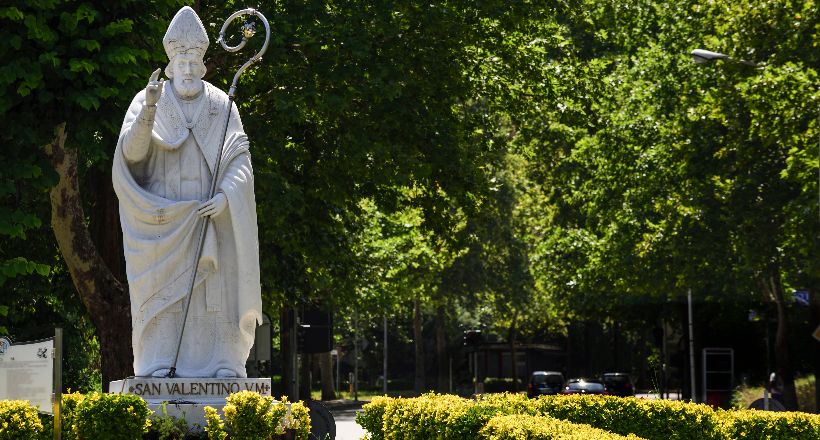
“Who really was Saint Valentine?”
——-
Valentine’s Day has become a global shorthand for romance, marked by greeting cards, heart-shaped chocolates, and red roses. Yet behind the commercial and cultural rituals lies a far less tidy origin story. While most people understand how Valentine’s Day is celebrated, far fewer know that the holiday’s name traces back not to one figure, but possibly several — all linked more by martyrdom than romance.
The Catholic Church historically recognized at least three different martyrs named Valentine, each associated with February 14. The name itself comes from the Latin Valentinus, meaning “worthy,” “strong,” or “powerful,” according to Encyclopedia Britannica. It was a common name in the Roman world, which complicates efforts to identify a single individual behind the holiday. According to the Catholic Education Resource Center, these three Valentines all share February 14 as their traditional feast day, though historical records for each are limited.
What is known paints a picture rooted in persecution rather than love letters. One Valentine was a Roman priest — and possibly a physician — who ministered to persecuted Christians during the reign of Emperor Claudius II and was executed by beheading for his faith, according to Catholic historical accounts. Another Valentine served as the Bishop of Terni, about 60 miles north of Rome, and was also arrested and beheaded under Claudius II, according to the Catholic Education Resource Center. A third Valentine was martyred in Roman-controlled Africa, though little else is known about his life or death. Over time, stories of these men appear to have blended, with legends passed down interchangeably rather than as distinct biographies.
Because of this uncertainty, the Roman Catholic Church removed St. Valentine from the General Roman Calendar in 1969, citing the lack of reliable historical information, according to Encyclopaedia Britannica. The Church continues to recognize him as a saint, however, and tradition has assigned him an eclectic portfolio: patron saint of lovers, people with epilepsy, and beekeepers. The romantic associations we recognize today emerged centuries later, shaped more by medieval poetry and cultural storytelling than by verifiable history. In that sense, Valentine’s Day is less about a single man and more about how myth, meaning, and human longing gradually converge — a fitting origin for a holiday built as much on symbolism as sentiment.

