


Why We Root for the Home Team
September 29, 2026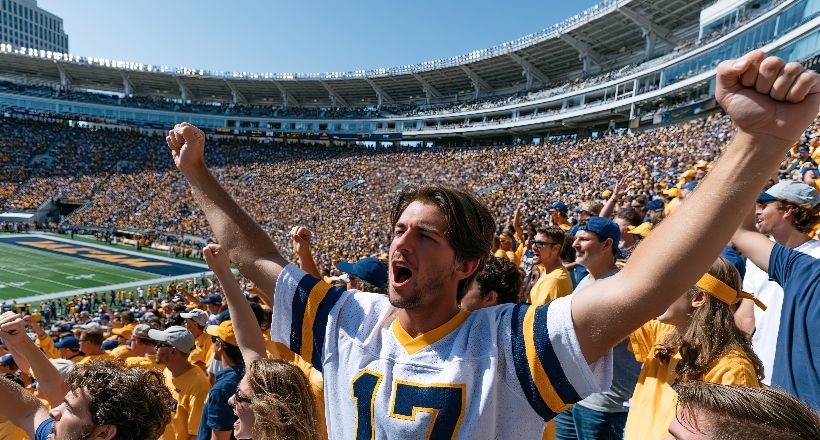
“The psychology of sports loyalty—and the business behind it.”
——-
Last weekend, my wife and I traveled back to Pittsburgh for my 50th high school reunion. Between the festivities, we made a point of attending both a University of Pittsburgh football game and a Pittsburgh Steelers game. It got me thinking: Why, after all these years, does rooting for a hometown team remain so important? Why do we invest so much emotion in the outcome of a game played by people we may never meet? The answer goes well beyond sports. According to sports psychologist Daniel Wann, whose research has examined fans from youth athletics through professional sports, the psychological connection people develop with a team can become an important part of their personal and social identity. Whether cheering for a high school, alma mater or hometown professional franchise, fans experience something fundamentally human: belonging. Research by Wann and Nyla Branscombe, published in the Sociology of Sport Journal in 1991, found that stronger identification with a sports team was associated with greater feelings of belonging and self-worth. In other words, when we cheer for our team, we are also celebrating our connection to a community, its traditions and, quite often, our own personal history.
There is also a fascinating psychological process at work when our teams win or lose. In a landmark 1976 study published in the Journal of Personality and Social Psychology, psychologist Robert Cialdini and his colleagues identified a phenomenon known as “basking in reflected glory.” Their research found that college students were more likely to wear university apparel following a football victory and more inclined to describe a winning team using the word “we.” Think about that. We didn’t throw the winning touchdown or make the game-saving tackle, yet somehow the victory becomes ours. Subsequent research by Wann and Branscombe found that highly identified fans were more likely to embrace their team’s successes and less inclined to distance themselves following defeats. That helps explain why loyalty can survive decades of disappointing seasons. The team becomes an extension of who we are, connecting us to childhood memories, family traditions, friendships and the places we once called home. For someone returning to Pittsburgh after many years away, those familiar colors and traditions can make the passage of time seem remarkably insignificant.
Of course, this emotional attachment also creates an extraordinary business opportunity. Professional sports organizations have learned to transform loyalty into revenue through tickets, merchandise, sponsorships, broadcasting rights and increasingly sophisticated fan engagement. According to the NFL Players Association’s licensing division, NFL Players Inc., player-related licensing partnerships generate approximately $3 billion in annual retail sales. Meanwhile, Deloitte’s 2024 Sports Industry Outlook identifies fan engagement and data-driven marketing as important components of the industry’s evolving commercial model. The business principle is straightforward: Consumers who identify emotionally with a brand often have reasons to remain engaged beyond the immediate product or experience. Sports franchises illustrate this particularly well. Fans purchase jerseys, travel to games, maintain season tickets and introduce their children to the same traditions. Yet the underlying motivation is rarely just the game itself. It is the experience of belonging to something larger than ourselves. And perhaps that explains why, after traveling hundreds of miles for a high school reunion, I still felt compelled to squeeze two football games into an already crowded weekend. I wasn’t simply going to watch football. I was going home.
The Takeaway: Sports loyalty is about more than winning and losing; it connects us to our identity, our communities and the memories that make a place feel like home.

