


Athens, Greece: The City of Ancient History & Graffiti
March 24, 2026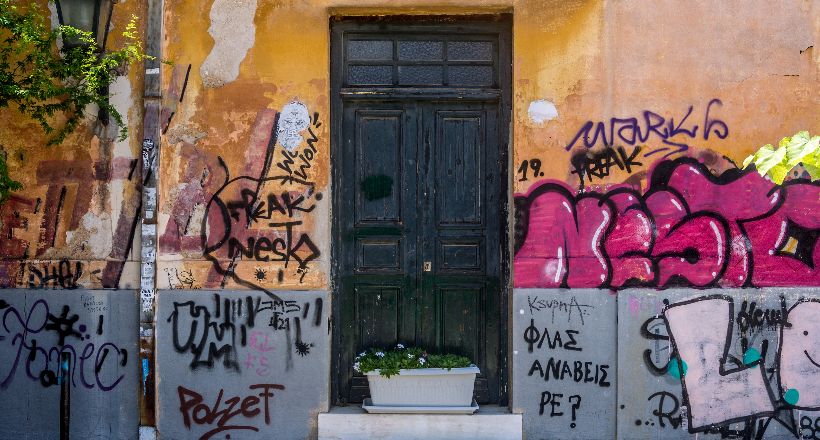
“Shocking and Sad.”
——-
Last summer, we spent two days in Athens—a city that, on paper, should feel like walking through a living museum. And in many ways, it does. Standing atop the Acropolis, you’re reminded that this is the cradle of Western civilization. For those who have never been, the Acropolis is the elevated hill that overlooks the city, while the Parthenon is the iconic temple that sits on top of it. The distinction matters. One is the stage, the other is the centerpiece. And when you’re there in person, looking out over Athens, the weight of history is undeniable.
But what struck me most wasn’t the ancient world—it was the modern one just below it. Street after street, building after building, covered in graffiti. Not just here and there, but everywhere. At first, it feels jarring. Then it feels overwhelming. And then, frankly, it feels a bit sad. What’s surprising is not just the volume, but the reaction—or lack thereof—from locals. It’s simply part of the landscape. Almost accepted. According to reporting by The Guardian, Athens saw an explosion of street art during the debt crisis, as “economic collapse and social hardship” fueled a wave of public expression . In many ways, the walls became a voice.
To understand it, you have to understand what the country went through. Greece was one of the hardest-hit nations in the global financial crisis. According to multiple analyses of the period, the economy contracted sharply and unemployment surged, creating what some described as a social crisis, particularly among younger generations . Researchers studying Athens noted that graffiti became a “symbolic mode of public expression” during these years, effectively turning the city’s walls into an “interactive public notebook” of frustration, identity, and resistance . In other words, what you’re seeing is not random vandalism—it’s a visible record of a society working through a very difficult chapter.

Athens, Greece: Changing of the guard at the Tomb of the Unknown Soldier.
One of the more memorable moments of our visit came just steps away from the Tomb of the Unknown Soldier, in front of the Hellenic Parliament. As you can see in the video above, the changing of the guard by the Evzones—an elite ceremonial unit of the Greek Army known for their traditional uniforms and precision drill—was, without question, the highlight of our time in Athens. There’s a precision and discipline to it that contrasts sharply with the surrounding streets. And maybe that’s the takeaway. Athens today is a study in contrasts—timeless beauty above, modern frustration below. The history is still intact. The pride is still there. But the walls tell you that the story is still being written.

