


The Grand Canyon Beyond the Rim
June 9, 2026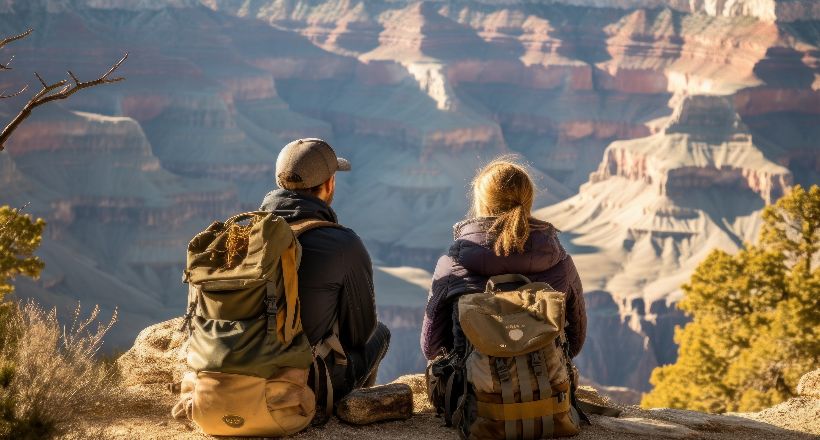
“One of America’s greatest adventures and mysteries.”
——-
My appreciation for the Grand Canyon began in 1991 when several of my college fraternity brothers and I set out to hike the famed Bright Angel Trail to the canyon floor. What sounded like an ambitious adventure quickly became one of the most physically demanding experiences of my life. The descent alone took approximately nine to ten hours as we carefully navigated a steep, uneven path that seemed to stretch endlessly below us. Much of the trail was narrow, and we often found ourselves stepping aside for mule trains transporting visitors through the canyon. In several places, a simple misstep could have resulted in a dangerous fall. Despite the challenge, the scenery was unforgettable, revealing new layers of the canyon with every switchback. To our surprise, we eventually arrived at Phantom Ranch Canteen, a welcome oasis at the bottom of the canyon where exhausted hikers could rest, eat, and prepare for the even greater challenge that awaited them—the climb back out.
What many first-time visitors discover is that the hike out is considerably more difficult than the hike in. The Grand Canyon has a way of humbling even those who arrive in good physical condition. Every switchback seemed steeper on the return trip, and dehydration was a constant concern despite carrying water and taking precautions. The National Park Service regularly reminds visitors that descending into the canyon is optional, but climbing back out is mandatory. It is a lesson many underestimate. More than three decades later, I still remember the sense of accomplishment that came from reaching the top and realizing we had completed one of America’s most demanding day hikes.
The Grand Canyon is also the subject of countless legends and mysteries. Large portions of the canyon are indeed off limits to the general public, but the reasons are generally far less sensational than the rumors suggest. Restricted areas often exist to protect fragile archaeological sites, preserve sensitive ecosystems, safeguard Native American cultural resources, or prevent visitors from entering terrain that is simply too dangerous. Nevertheless, stories persist of hidden caves, lost civilizations, government secrets, and mysterious helicopter activity in remote sections of the canyon. One frequently cited tale involves explorer G.E. Kincaid, who allegedly discovered an ancient underground city in the early 1900s, though historians have found no credible evidence supporting the claim. While most of these stories belong more to folklore than fact, they continue to add an intriguing layer of mystery to one of the world’s most spectacular natural wonders. Sometimes the Grand Canyon’s greatest attraction is not only what we can see, but what we continue to imagine lies beyond the next bend in the trail.

